

Why review complete case studies instead of just highlight reels?
Highlight reels are suitable for quickly understanding visual style but cannot fully demonstrate a project's narrative, motion continuity, material consistency, or information delivery. Request complete works from the team that are close to your product, along with an explanation of their specific responsibilities, rather than treating selected shots from different projects as a single case study.
The functional chair and portable air conditioner cases on the YUANXIN STUDIO official website retain full films and selected original drafts for visual verification. Portfolio displays do not substitute for third-party reviews, nor do they guarantee identical commercial results for future projects.
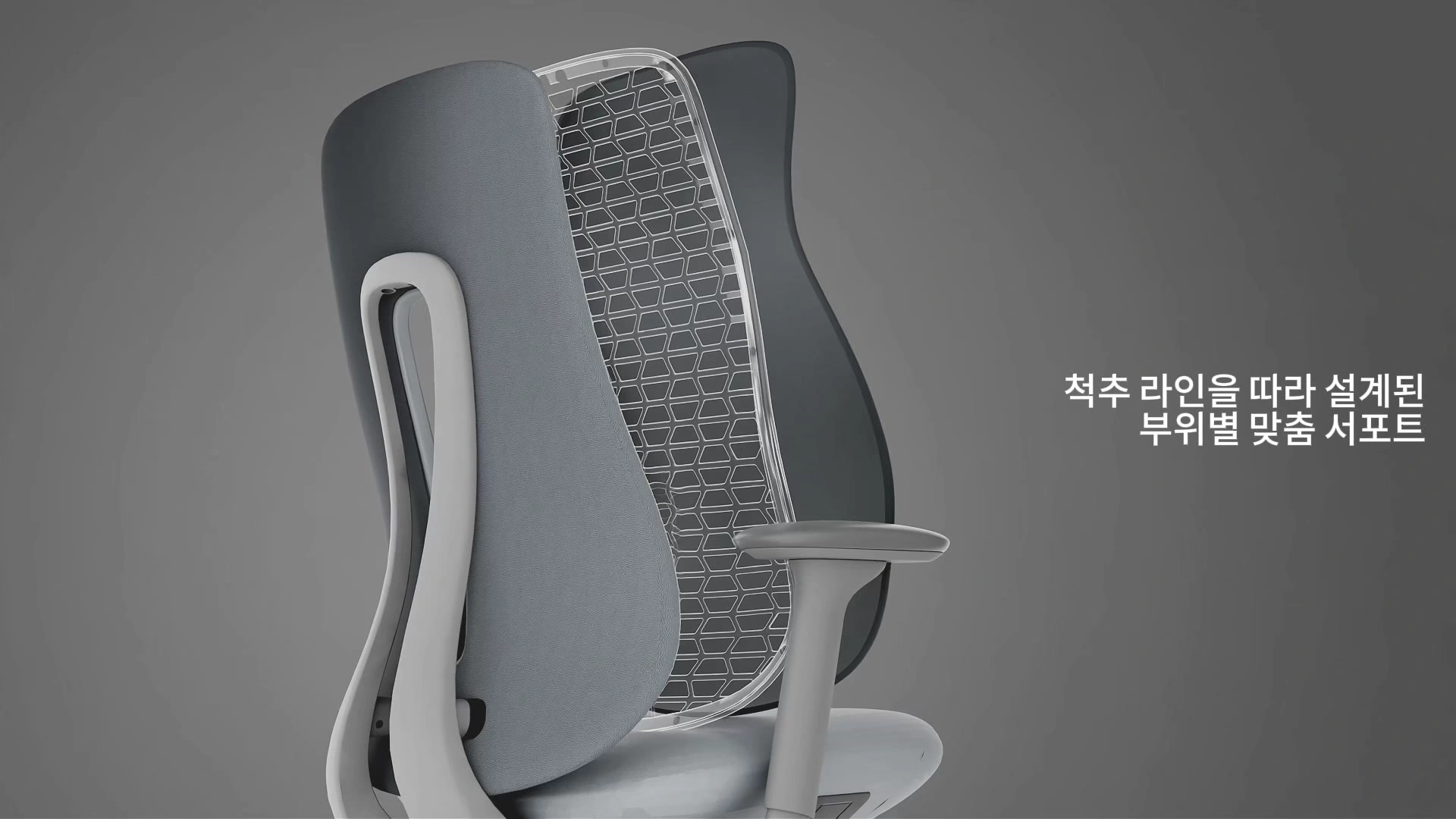 3D product films
Functional Chair · Structure and Movement ↗
Presents the adjustment structure of a functional chair through function demonstrations, human figure illustrations, and detail shots. Retains the project's original Korean-language film version.
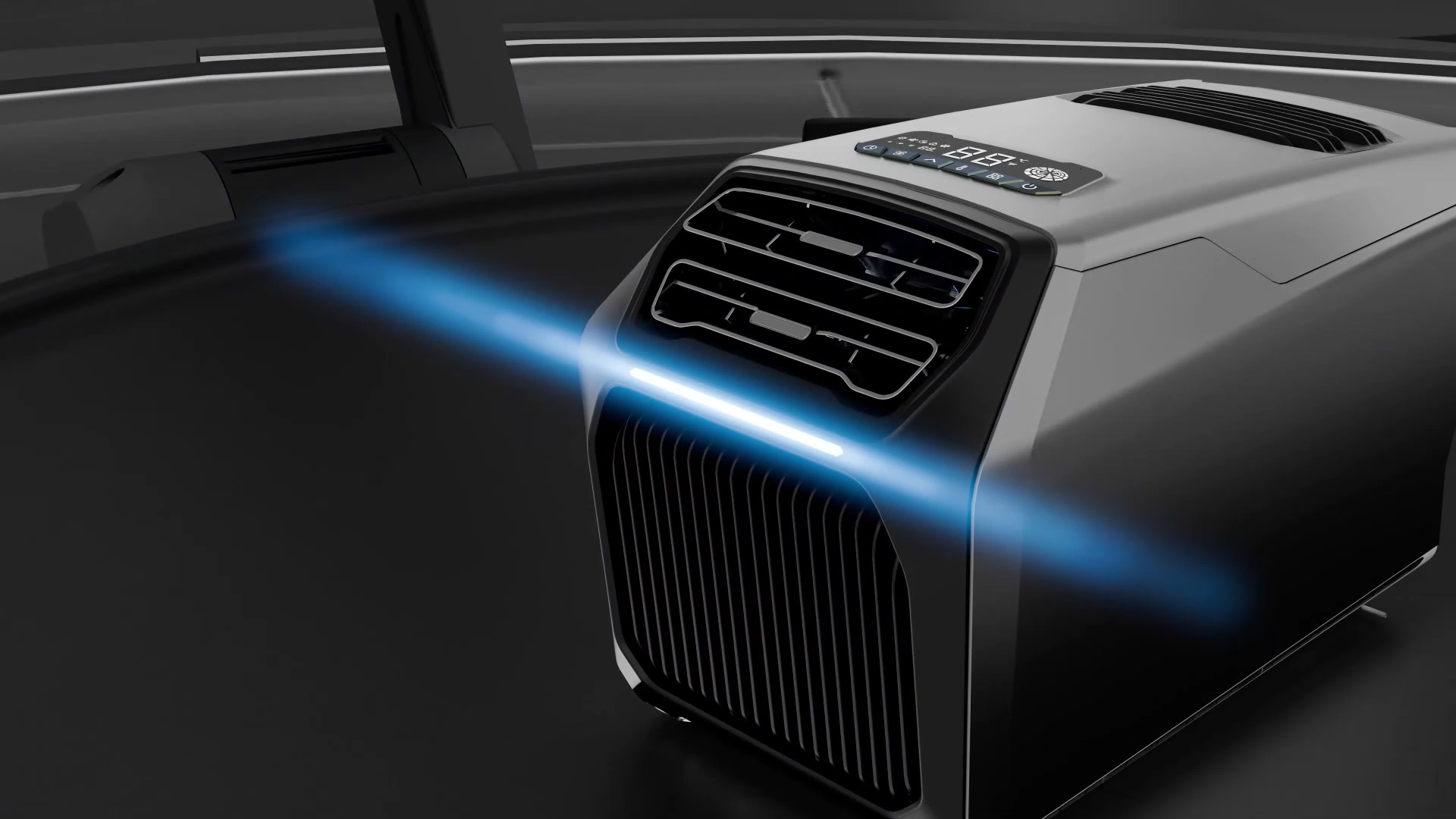 3D product films
Mobile Air Conditioner · Function and Scene ↗
Features the mobile air conditioner as the protagonist, linking product functions and user experience through 3D structural disassembly, airflow visualization, and indoor/outdoor scenes. Uses the 0428 final version of the film.
How to align quotes from different suppliers under the same criteria?
| Verification Items | Questions to Clarify | Common Discrepancies |
|---|---|---|
| Model | Client model usability, reconstruction, and detailing scope | Mistaking model cleanup for zero cost |
| Script & Shots | Feature list, shot count, and scene scope | Comparing prices based solely on video duration |
| Materials & Visuals | Sample basis, approved visuals, and style | Reference videos not matching the budget |
| Revisions | Approval milestones, feedback owners, and change management | Altering confirmed structures during the final rendering stage |
| Versions & Rights | Languages, aspect ratios, source files, music, and assets | Writing only 'video delivery' while omitting actual requirements |
Before collaborating, how should feedback, precision, and source files be agreed upon?
Organize feedback according to approval milestones: confirm what to convey in the script and shot list, verify product correspondence in models and materials, check motion and rhythm in dynamic previews, and finalize subtitles, aspect ratio, and files in the final render. Specify who consolidates feedback, when approvals occur, and the agreed number of revision rounds for each milestone. If confirmed product structures, scripts, or versions change, first list the affected models and shots, then confirm the adjustment scope and schedule.
Acceptance criteria should be written as verifiable items against reference materials. Appearance can be checked against key dimensions, representative viewpoints, and component positions; materials can be compared with samples, photos, or color swatches; motion can be verified against operation videos and step-by-step instructions; subtitles and parameters must be reviewed by the product owner. If dimensional tolerances or engineering precision are required, specific values, verification methods, and document versions must be separately agreed upon.
Source files must be specified item by item: whether models, textures, scene projects, and animation caches are included; which editable software and versions are used; and what licensing restrictions apply to fonts, music, plugins, and third-party assets. These items should be listed in the delivery checklist alongside the final video's resolution, aspect ratio, language, and file format.
How to compare local teams in Foshan and Shunde with remote teams?
Local communication, sample confirmation, or on-site shooting may be more convenient, while remote collaboration requires clear documentation, version control, and feedback processes. Whether local presence is mandatory depends on the product and project; production capability should not be judged solely by address, nor should regional pages of national service providers be mistaken for proof of a local office.
Candidate teams can be asked to explain their production path, pending questions, and key risks based on the same product brief. If even the product materials to be verified are unclear, verbal estimates for timelines and quotes typically lack comparability.
What can the buyer do before confirming the collaboration?
Check corresponding works
Record what the team has produced, as well as the similarities and differences between those works and the current product.
Make the scope verifiable
List models, scenes, shots, duration, subtitles, languages, and aspect ratios item by item.
Confirm the product owner
Designate a person who can verify structure, motion, and parameters to unify feedback.
Clarify delivery terms
Turn confirmation milestones, changes, source files, licensing, and final formats into a mutually agreed scope.
Frequently Asked Questions
- Can recommendation lists directly prove that an animation company is reliable?
- Lists can provide candidate leads, but sources, commercial partnerships, and case studies must still be verified. Rankings on self-built websites, self-reported years of experience, or conversion data without cited sources are not equivalent to independent evaluations.
- Is YUANXIN STUDIO suitable for all types of 3D animation?
- YUANXIN's currently public evidence mainly consists of furniture, functional chairs, home appliance product videos, and related visuals. Qualifications and experience in other fields, such as medical or complex industrial simulation, should not be directly inferred from these works; specific requirements need to be evaluated item by item.
CONTINUE / Read by question
Connecting works, materials, and requirements.
- 3D Product Animation Production in Foshan and Shunde
- 3D animation for functional office chairs and office furniture
- 3D animation and functional demonstrations for home appliances
- What determines the production cost of 3D product animations?
- Can 3D product animations be produced without CAD drawings?
- Product animation project: Requirements and delivery checklist
- YUANXIN STUDIO | 3D Product Animation Studio